

Founder’s letter: A Conscious World
From Pritan Ambroase, founder of Humans of Our World: why he named it, why there are no saviours, and why we must rise for one another.
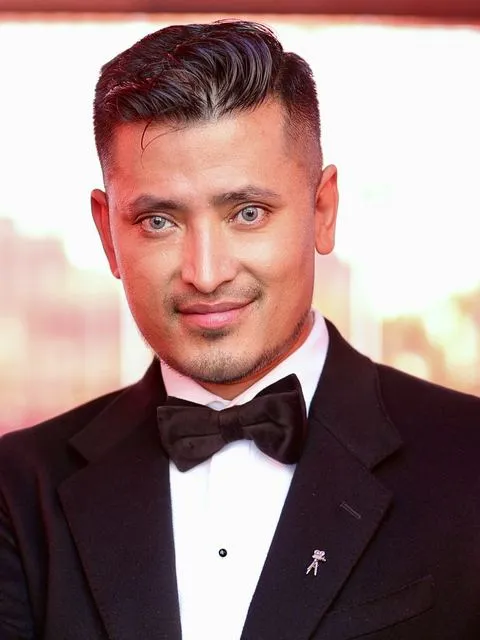
Hoping, wishing and waiting will never be enough. If we want a better world, we must be prepared to help make it.
If not us, then who? If not now, then when?
I have never understood why we have become so accustomed to suffering that we can witness it, discuss it, condemn it, and then simply carry on. I have always been impatient with that way of living. I do not want us to spend our lives complaining about injustice while waiting for somebody else to correct it. I want us to become the people who act.
For me, humanitarianism began long before I understood the language of foundations, campaigns or institutions. As a child, I saw how easily people divided themselves by nationality, skin colour, religion, class and circumstance. I could not accept that somebody’s suffering mattered less because they were born on the other side of a border. We share one world. It is the only home we have, and we must learn how to live in it together.
Why I called it Humans of Our World
England has always been home to me. I grew up between Surrey, Kent and Hampshire, but my education took me far beyond the boundaries of any one country or culture.
From early childhood, boarding schools became part of my life. By the time I completed secondary school, I had attended more than eleven schools, six of them boarding schools, across seven countries and three continents. Every school introduced me to different languages, religions, traditions, cultures and ways of understanding the world.
My university years and further education took me even farther, across two additional continents and five more cities.
Throughout those experiences, I was surrounded by people who had been raised to see the world differently. Different nationalities. Different beliefs. Different languages. Different histories. Yet the more I experienced those differences, the more I recognised something far more important: we are much more alike than we are different.
Wherever I went, people wanted to be loved, understood, respected and accepted. They wanted to belong. They wanted their families to be safe, their dreams to matter and their lives to have meaning. Beneath our differences, I kept finding the same humanity.
That understanding shaped the way I saw the world, and it is why I chose the name Humans of Our World.
Not humans of one country, one religion, one race or one culture. Humans of our world. All of us.
I wanted to create something that reflected what my own life had taught me: that humanity is not defined by the borders that separate us, but by everything we share. We do not need to belong to the same nation to care for one another. We do not need to speak the same language to understand suffering. And we do not need to share the same beliefs to recognise one another’s dignity.
We are different in countless beautiful ways, but we belong to the same human family.
That is the foundation upon which I built Humans of Our World, and the conviction that continues to guide everything we do.
When conviction becomes action
In those early years, I began bringing people together to help others living through poverty and hardship. We did not start with extraordinary resources. We started with people who were willing to do something. One cause, one community, one act at a time, we tried to be useful to those facing the consequences of disasters, conflict, discrimination, illness and injustice.
As these efforts grew, they became Humans of Our World Foundation. Some people dismissed my ambitions as unrealistic. I never accepted that compassion required a title, a fortune, a passport from the “right” country or permission from an institution. It requires conscience, commitment and the courage to act.
Our work taught me something I still believe: the most meaningful assistance does not end when the person helping goes home. It leaves people with more opportunity, more confidence and more power over their own lives. People who have been treated as victims can become advocates, organisers and humanitarians themselves. That is how change travels from one person to another.
No saviours. No superiority. Just humanity.
I have always rejected the saviour mentality that sometimes surrounds charity. Humanitarianism is not an occasion for the fortunate to congratulate themselves for helping the supposedly unfortunate. It is not charity tourism. It is not a photograph taken at the expense of somebody else’s dignity. Above all, it is not an excuse to look down on another person.
When I travel for humanitarian work, I go to meet people, to listen, to learn, to make friends and to stand alongside them. I have never considered myself their saviour. I have often returned having learned more from them than they could ever have learned from me.
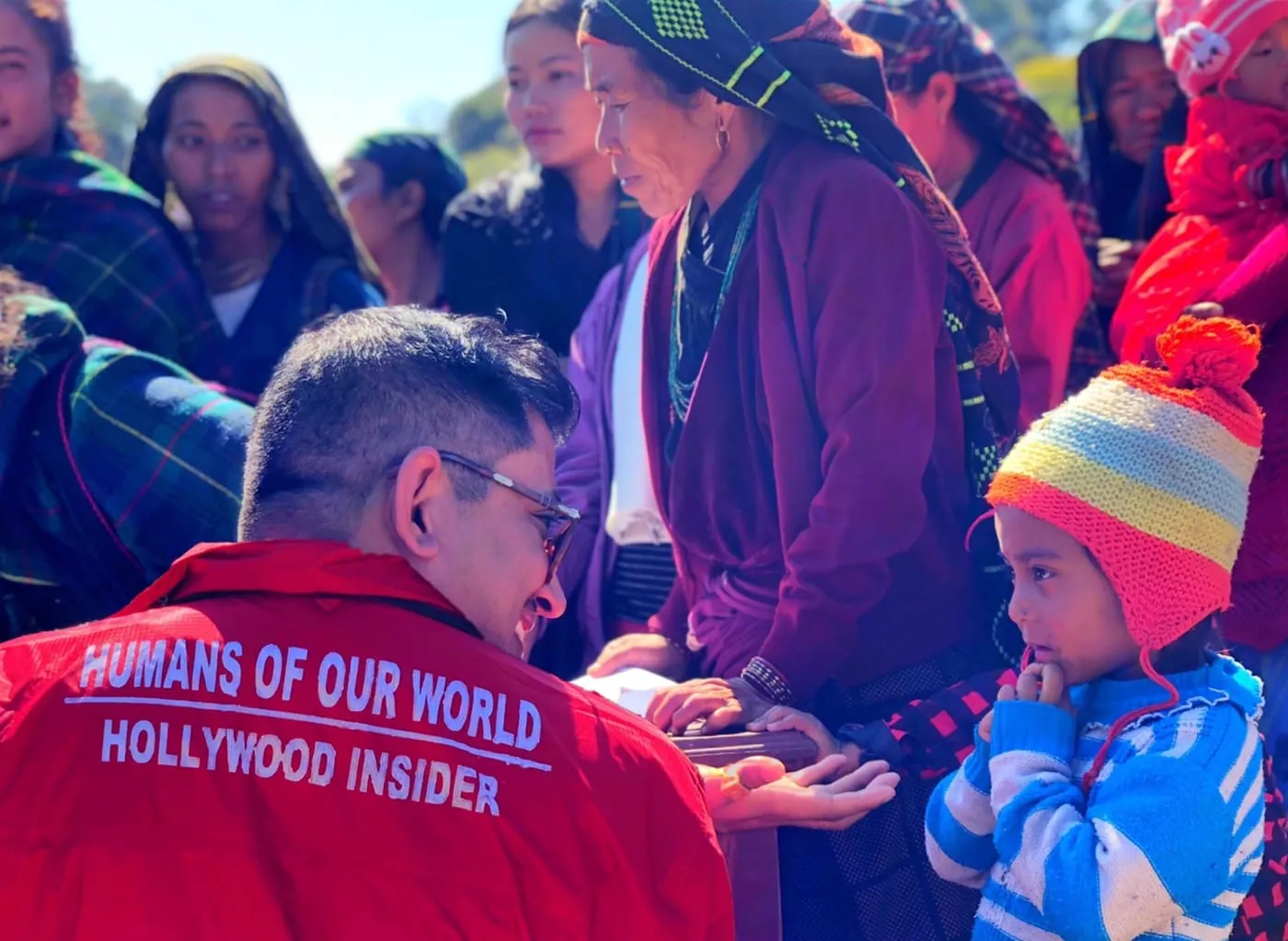
I remember meeting men in Ghana who came to a job fair prepared to work and build their futures. They were not asking to be handed a life. They wanted the chance to earn a living, support their families and contribute to their communities. I helped guide them towards employment opportunities. What stays with me is not a photograph of somebody receiving help, but their determination to help themselves.
That is the foundation I believe in: one that regards every person as an equal, protects dignity, respects local knowledge and works towards lasting opportunity. We are not just a charity. We are more than that. We are redefining what charity can mean. We are a movement that campaigns, questions, educates, creates and acts.
Why I reengineered Hollywood Insider
One of the hardest lessons I learned was that being right about an injustice does not guarantee anyone will listen. A foundation can issue appeal after appeal and still speak mainly to people who already care. Meanwhile, millions of people willingly spend their time with films, television, music, artists and entertainment. I kept asking myself a question: why should the stories that bring us together for pleasure not also bring us together for purpose?
When I took over as CEO of Hollywood Insider, I made a decision that many regarded as commercially impossible. I would rebuild an entertainment-media network that turned away from gossip and scandal and towards substance, education, meaningful entertainment and philanthropy. I set out to make what I regarded as the first entertainment media network to explicitly ban gossip and scandal as an editorial principle.
I was told it would not work. People insisted that audiences wanted rumours, humiliation and scandal, and that a media network refusing to feed that appetite would lose their attention. I believed the opposite. There was an overlooked audience hungry for intelligent, entertaining stories that respected both the people in them and the people watching them. I believed we could reach that audience without sacrificing humanity.
So I rebranded and reengineered Hollywood Insider around that conviction. Cinema and television did not disappear from the story; they became its doorway. Through artist interviews, film commentary, original programmes, public-interest reporting and investigations, we could bring people into conversations about causes they might never have sought out from a conventional charity. We did not need to abandon entertainment to challenge injustice. We could use its reach, creativity and cultural influence to make people think, care and act.
Hollywood Insider, a media network and production company, became a media partner of Humans of Our World. Through that partnership, we have explored subjects including racial inequality, private prisons, police brutality, healthcare, the treatment of disabled people, freedom of expression, war and the dignity of people too often overlooked. The network’s journalism and the foundation’s humanitarian mission are distinct, but their belief in the power of meaningful stories meets in the same place: human beings deserve to be seen, heard and treated with respect.
I remember a viewer who discovered one of our Messages from America discussions about universal healthcare after watching entertainment related to Joker. The viewer called the channel a “goldmine of content”. That was a small but beautiful confirmation of what I had hoped: somebody had arrived through popular culture and stayed for a conversation about humanity.
Our Hollywood Insider and Humans of Our World partnership continues to demonstrate that storytelling can do more than entertain. A free press can investigate; a film can reveal an injustice; a cultural platform can widen the circle of people who care. We need all of those voices.
For every child. For every person. Beyond every border.
My conviction has taken me to places where injustice is impossible to dismiss as an abstract argument. I have spent time with Ukrainian children whose education continued in underground classrooms as war threatened their lives. In directing Can I Go Home Now?, I wanted the children to speak for themselves, not to have their experiences explained away by the powerful. Its purpose is not to ask the world to pity them. It is to insist that the world listen to them.
The same principle took me onto the red carpet at the Venice Film Festival in solidarity with the women of Iran and the Woman, Life, Freedom movement. I am not Iranian. I do not need to be. The dignity and freedom of Iranian women matter to me because they are human beings, and their humanity is bound to ours.
The causes of Humans of Our World may seem diverse: education, child protection, healthcare, women’s rights, disability rights, press freedom, peace, animal welfare, the natural world, ethical technology and much more. To me, they are not separate islands. They are expressions of one central responsibility: to recognise dignity wherever it exists and to challenge the forces that diminish it.
A conscious world
We have become extraordinarily clever at inventing technologies and conveniences. We automate travel, commerce, communication and countless parts of daily life. Yet we must ask whether our compassion, our collective judgement and the care we show the planet are advancing at the same pace. Material progress without human progress is not enough.
In a world where artificial intelligence is rising, real human wisdom must rise even higher. I want us to be more imaginative about solving problems than we are about accepting them. Some of the greatest changes in history began as ideas somebody dismissed as unrealistic, unconventional or impossible. We need the courage to question those labels when they become excuses for inaction.
Anyone can fight for their own pain, their own people, their own nation and the injustices that affect them personally. But for our world to truly evolve, we must also fight for the pain of others. We must understand that those we call foreign are also our own. Their suffering is our concern. Their dignity is our responsibility. Their humanity is our humanity.
Let empathy become our superpower. Let conscience become our compass. Let wisdom guide our progress.
Our greatest revolution will not come from declaring that we belong to the same side of a border, a political party, a religion or a movement. It will come when people rise for one another simply because they share the same humanity. The fight is not one population against another. It is compassion against cruelty, justice against injustice, and human dignity against every attempt to diminish it.
Humanity is not fully realised when we defend only ourselves. It is realised when we defend one another.
So please do not merely agree with these words. Bring them into your life. Protect somebody who has no power to repay you. Stand beside someone whose circumstances are not your own. Be loyal. Be courageous. Love openly. Build friendships across the differences we have been taught to fear. Make change visible in what you do, not only in what you say.
We are still travelling together on this one extraordinary world. I want us to care for the people who share it with us and preserve it for the generations who will follow.
Enough waiting for a better world. The time is now.
We Rise for One Another.
MAKE HUMANITY VIRAL.
Pritan Ambroase
Founder, Humans of Our World Foundation
[email protected]
About Pritan Ambroase
Pritan Ambroase is a filmmaker, humanitarian, multi-industry entrepreneur and media executive whose work connects storytelling, ethical innovation and social impact.
The founder of Humans of Our World Foundation and CEO of Hollywood Insider, Ambroase has dedicated his work since childhood to challenging injustice, connecting communities and creating initiatives that put humanity at the centre of progress.
Raised in England and educated across multiple continents, his experiences among different cultures, religions and communities shaped his conviction that humanity’s similarities are far greater than its differences.
Through Hollywood Insider, he has championed a media philosophy that rejects gossip and scandal in favour of journalism, education, cultural understanding and meaningful storytelling.
He is also the director and producer of Can I Go Home Now?, a feature cinema-docu filmed in active Ukrainian war zones that gives children the opportunity to tell their own stories without politicians or adult interviewees speaking on their behalf.
His approach brings together humanitarian advocacy, entrepreneurship, cinema, education and technology around one principle: genuine progress must improve human lives.
He continues to lead the foundation’s international vision and its growing movement, Make Humanity Viral.
Stories that matter, in your inbox
News from the film, our campaigns and the people we work with. No spam, ever.